Maternal Infant Health in Arizona
Disproportionate Black maternal and infant morbidity and mortality rates nationally and in Arizona are preventable alarming public health issues. The data from the Centers for Disease Control (2023) underscores the urgency to address these stark racial disparities. For example, Black women are three times more likely to die from pregnancy-related causes than White women. Moreover, those disparities increase with age, and maternal health inequities widened for Black women during the COVID-19 pandemic. Black women are more likely than White women to have certain birth risk factors contributing to infant mortality and Black mothers were twice as likely to receive late or no prenatal care as compared to non-Hispanic White mothers. The loss in the Black community of the death of an infant before their first birthday is avoidable, yet tragically there is a 2.4 times greater infant mortality rate compared to non-Hispanic White mothers; a four times greater likelihood to die from complications related to low birth rate and 2.9 times sudden infant death syndrome. Variations in quality healthcare, social determinants of health, underlying chronic conditions, structural racism, and implicit bias contribute to these heartbreaking disparities.
To ensure all Arizonan women receive equitable care, The State of Black Arizona is building more awareness and activism. We seek to create a call to action on a range of strategies from organizations and groups to amplify the improvements needed within the system – treatment, access, clinical measures, and elevate the lived experiences of Black mothers. Our actions align with your priorities to "invest in and improve the communities where we live and serve" by contributing data, outreach, and education to advance health equity and community resiliency—specifically, this campaign's impact on removing the barriers to short and/or long-term needs of Black mothers and their children.
The State of Black Arizona leads the production, synthesis, and socialization of actionable data and insights for all Arizonans, focusing on the Black community. We ensure that the factors leading to inequitable outcomes are identified, validated, and brought to the attention of the Black community and civic and community leaders. We will utilize and localize the March of Dimes- Phoenix Market Mom and Baby Action Network (MBAN) Igniting Impact Together- Health Equity Framework, focusing on three strategies to help achieve equitable outcomes for Black mothers, infants, and families in Arizona; dismantle racism and address unequal treatment, and increase access to quality healthcare and safe and connected communities. We will facilitate conversations with Black stakeholders and foster the development of a common agenda and a call to action for Arizona stakeholders to move this work forward and, ultimately, enact positive change.
Our goal is to increase awareness about Black Maternal and Infant Health in the State of Arizona by providing access to data, publishing white papers, and convening community meetings to elevate this issue to community visibility, examine policy implications, understand proactive clinical measures, and move this awareness in the direction of the vital power of collective action. The proposed outcomes are as follows:
We anticipate the impact will be an increased localized awareness for cross-sector stakeholders to engage in strategic action and innovation, including, but not limited to, data improvement and access, cultural and congruent clinical measures, and responsive private and public sector policies regarding Black Maternal Infant Health in Arizona.


Supported by


Additional Information
Announcements
April 11, 2023 - National Black Maternal Health Week
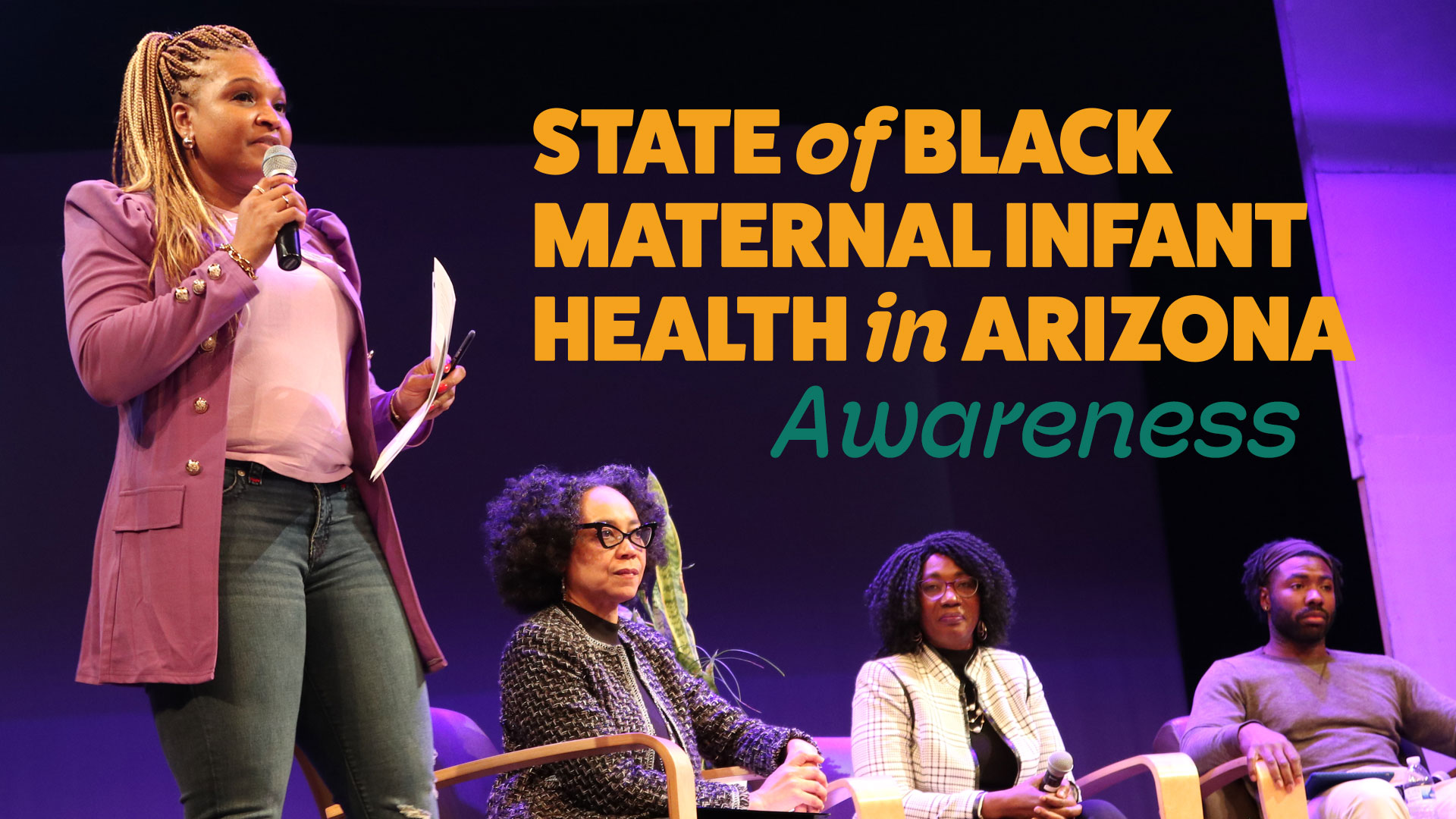
April 19, 2023 - Black Maternal Infant Health In Arizona Awareness Campaign
June 1, 2023 - Well-Being of Black Maternal Health in Arizona
Videos