


Celebrate, Support and Expand Black Business
- Impact for Arizona
One strength has been that Arizona’s Black population and business base are growing. But reports have also shown that many firms still struggle to find capital for long-term success. Recommendations have called for, in part, better access to all types of capital sources, more startup resources, and a directory of Black businesses.
In response, a number of Arizona entrepreneurs have created and expanded programs and financing opportunities for Black businesses. They are celebrating, supporting, and expanding the Black business sector for a better economy and brighter future in Arizona. Their stories almost always have two things in common: 1) like all entrepreneurs, they saw a need and filled it; and 2) they have drawn on the power of community to ensure success.
For Black Business Month 2024, State of Black Arizona and Greater Phoenix Economic Council have profiled some of the people and programs that are changing the landscape for Black-owned businesses. Their impacts will be presented during the month of August.
IMPACT Stories
- Ashley La Russa | Blax Friday
- Meg Zemlicka | BIPOC Manufacturing Program
- Carmen Attikossie | We Rise Program
- Dr. Velma Trayham | IMPACT AZ
- Keneshia Raymond | BIPOC Loan Fund
- Andre Whittington | Growth Partners Arizona and Oye Waddell | Hustle PHX
More IMPACT Stories
You can read more IMPACT Stories through our partnership with Greater Phoenix Economic Council
Celebrating
Black Business Month 2024
Two Black San Francisco entrepreneurs, an engineer and a publisher, created Black Business Month, which is observed nationally every August, more than 20 years ago1. They sought to celebrate the Black business community’s accomplishments and its significant potential, especially if access to capital increased.
Since 2020, the State of Black Arizona, a statewide nonprofit data organization, and Greater Phoenix Economic Council, a leading economic development entity, have worked together to do the same—and more. The organizations have issued three State of Black Business reports detailing the Black-owned business community’s strengths and challenges and presenting concrete strategies for expansion.
Resources
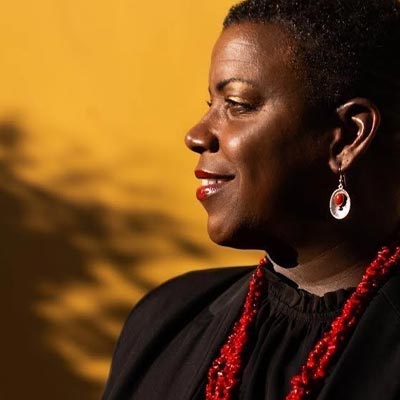
Blax Friday—A Statewide Directory Celebrates Black-Owned Businesses
Ashley La Russa
“Design a comprehensive statewide directory of Black-owned businesses.”
State of Black Business 2021


Like successful entrepreneurs everywhere, Tucsonan Ashley La Russa saw a need and filled it. But she hasn’t done it alone.
In the wake of George Floyd’s death in summer 2020, many in Tucson wanted to connect with the Black community and support Black-owned businesses. But an easy way to locate more than a handful of well-known enterprises didn’t exist. Plus, since many businesses were e-commerce only, they were often relatively unknown in the community.The pandemic shutdown offered the time to craft a community-oriented solution.
Ashley and colleagues, some who had been tracking Black business via #BlaxFriday, started creating the Blax Friday Google sheet, now Arizona’s largest online directory and app of Black-owned businesses. Starting in Tucson and moving on to Phoenix and the state, Blax Friday has made it easy to connect with Black businesses and encourage collaboration among entities. As a positive force for “representation and economic empowerment of Black business owners,” Blax Friday helps owners “build a bridge” to their communities.
Available at BlaxFriday.com and via the free app, the directory now lists more than 1,500 businesses in 15 categories, including, among others, apparel, food and bar, gifts and art, hair, home and tech, media and events, nonprofits, and professional services. The 2024 goal is 2,000 entries. The next expansion target is expected to be more Black-owned professional entities, such as doctors and legal services.
But 1,500-2,000 is definitely not all of the Black-owned businesses in Arizona. Ashley estimates there are at least three times as many as have been listed thus far. Blax Friday allows entrepreneurs to input their businesses in the databank. Community members tell Blax Friday about businesses also. Thus, many help Blax Friday expand.
Originally from Texas, Ashley moved to Tucson in 2008 to work for Arizona Theatre Company as a stage manager. At first, she expected to stay just a short time before moving on in the theatre world. Instead, the opportunities she saw in Tucson convinced her to stay for the long haul. She put her talents to work in a business called Roux Events in addition to Blax Friday.
She has become a well-known figure in Tucson but insists “it takes a village” to keep Blax Friday growing, especially because “reach” is always the greatest challenge. Working with State of Black Arizona has been important to Blax Friday’s statewide exposure and reaching beyond city boundaries.
Blax Friday is a positive response to the desire among many Arizonans to support Black-owned businesses. Plus, it reduces the isolation and barriers entrepreneurs can face. Ashley and the Blax Friday team, now nine strong, see business growth and new opportunities every day.
Blax Friday is now a foundational resource for business growth and collaboration. It is an essential tool for businesses as purveyors and employers and Arizonans as consumers and investors.
Testimonial
"Blax Friday is truly a Godsend for Black owned business! So glad I found them! Their amazing programs have made it possible for my vision and dreams to come true by providing opportunities and events to help Black business owners grow, succeed, and thrive! I love their mission! I am so grateful to be apart of the Blax Friday community."
- Cierra B. Webster, Owner of Revampp Salon

City of Tempe and Community Partners Support
Manufacturing Firms Owned by People of Color
Meg Zemlicka
“Interestingly, there were virtually no Black-owned businesses in manufacturing and utilities, two sectors that require substantial startup capital.”
State of Black Business 2021
Black-owned businesses have been most visible in health and social assistance fields and consumer sectors. Whether due to an overriding drive to serve residents or because of limited capital and barriers to entry in other fields, Black-owned businesses have been next to nonexistent in manufacturing in Arizona. However, the initiative behind the pilot Tempe BIPOC Manufacturing Grant Program could help change that.
In Arizona, manufacturing is in the spotlight thanks in part to the renewed focus on the semiconductor industry. But interest in expanding participation overall, especially from BIPOC individuals, in the business of making things is also evident. From “maker spaces” to “incubators” to interest from community development corporations and established companies looking for new suppliers, manufacturing is growing and offering new opportunities for Black, Indigenous, and people of color entrepreneurs.
In 2022, with support from Mayor Woods and City Council members and federal funds developed through Congressman Greg Stanton’s office, Tempe asked State of Black Arizona to help coordinate the “many moving parts” of the BIPOC Manufacturing Grant Program and evaluate the pilot program.
Tempe then worked with a committee of community partners, in addition to State of Black Arizona, including RAIL Community Development Corporation, Tempe Chamber of Commerce, Hustle Phoenix, and Pacific Southwest Minority Supplier Development Council, to identify 26 early-stage BIPOC-owned manufacturers in Tempe. Each business was matched with a partner for personalized, one-on-one work and mentoring. Quarterly learning sessions for the cohort developed new expertise in such areas as digital marketing, finance, banking, and accessing capital and resulted in a strong support network among the businesses.
Meg Zemlicka, City of Tempe Economic Development Program Manager for Business Retention, Workforce Development, and Redevelopment helped provide learning opportunities and served as the city’s point of contact. Based in part on support programs in other cities for “micro manufacturing” or “small batch” and “on demand” processes, she noted that Tempe’s pilot stood out for its focus on involving community organizations to identify potential participants and support the businesses directly. Without the community knowledge and experience, locating and serving the businesses selected would have been difficult.
Each business received a grant of $25,000 for eligible expenses. Funds were mostly used for new product development and reformulation, followed by process development and equipment upgrades, raw materials, marketing and digital advertising, supply chain development and initial production runs, and website development.
The BIPOC grant program was a first in metro Phoenix, but the feedback from participants and the evaluation by State of Black Arizona showed its value and potential for the future. Participants with smaller businesses noted that the support and funds catalyzed growth and improvements that they wouldn’t have been able to do otherwise. Among the larger businesses, the funding helped increase visibility and fine-tune processes.
Overall, the manufacturing businesses showed gains in every category researched, including production, revenue, and employment. Although the greatest strides may be seen in future years and no guarantees exist for these businesses, the data from the pilot, point to numerous reasons for confidence in the businesses and more cohorts for this potentially far-reaching support program.
For a taste of Black-owned manufacturers, Arizonans should check out:
- LaCheris Luster and RecoFiT, a maker of high-quality consumer compression gear to help athletes perform better and recover faster.
- Jelani Jones and Skate Forty 8, a purpose-driven for-profit skateboard company that collaborates with diverse local artists to create skateboards that empower kids in our communities.
As the evaluation revealed, “while many businesses fail, those that thrive contribute greatly to local and regional economies…With continued efforts such as the Tempe Micro-Manufacturing Grant Program, Tempe’s local manufacturing sector is poised for success.”
Testimonial
“The grant helped with updating my product line, labeling and packaging, as well as the ability to purchase larger quantities of inventory to be better equipped for larger orders and events- allowing for an increase in sales and revenue. This grant ultimately allowed me to be better prepared in scaling my business into the next phase of growth.”
- CiCi Colbert, owner of Alla’ Herbs

We Rise Accelerates Growth for Black-Owned Businesses
Carmen Attikossie
“Increase support for Black-owned businesses: This includes access to capital and direct financing pathways, startup resources, education, collaborative research, and assistance identifying and navigating business opportunities.”
State of Black Business 2021
Arizona’s Black residents represent 6 percent of the state’s population, but Black-owned businesses account for just 3 percent of all businesses and 1.5 percent of employer businesses (those with more than 1 employee). Thousands more Black-owned enterprises would be needed simply to reach parity with the population.
Fortunately, Local First Arizona, one of Arizona’s most experienced local economic development organizations and its We Rise Business Accelerator for Black entrepreneurs are on it. We Rise, a 6-month intensive business and personal development program, recently served its 100th business and welcomed its largest cohort ever of 32 businesses for the Fall 2024 session.
Carmen Attikossie, Senior Manager for We Rise Small Business Development at Local First, leads recruitment and selection of business owners. She brings her experience as a skilled entrepreneur to the effort along with her personal understanding that starting a business and making it last are not for the faint of heart. Knowledge, persistence, and support are key.
Targeted to those with a year or two of experience with their businesses, We Rise requires focused learning time and provides fundamental skills and one-on-one mentoring that can make the difference between success and failure. We Rise, an online effort to ensure accessibility to everyone regardless of geography, provides a supportive space for Black business owners to learn, find solutions to challenges, and build a strong foundation.
Local First Board member Keisha Tatem championed bringing small business support specifically to Black entrepreneurs. We Rise expanded on other Local First community-based business programs and tailored the lessons learned there to the Black community.
Local First began planning the program in 2019 with guidance from board members and community leaders and started it online in 2020. Two cohorts annually serve a broad range of businesses from food trucks to skin care, health care, education, and more.
we Rise focuses on financial literacy, topics informed by community experience, and what business owners say they need most. Today, the components reflect a comprehensive, practical curriculum:
- Business Finance: Get your money right.
- Business Model Development: So you wanna do business?
- Business Plan: The nuts and bolts.
- Pitching for Success: Make it Happen!
- Black in Business: Doing business while Black.
- Networking & Storytelling: Can you talk that talk?
We Rise is free to attend, but businesses are asked to save $1,000 during the program to invest in their enterprises. Local First matches that effort with another $1,000. In addition, participants are encouraged to open an account at a community bank or credit union in line with Local First’s focus on local financial services as an asset to entrepreneurs for future capital. Business owners also do a market analysis and business plan and have access to Black business professionals for mentoring and advice.
A recently added feature is an annual Demo Day for We Rise graduates. Antoinette Mendez, owner of education consultancy Mission 2 Transition, took first place in 2024 and received a $15,000 prize. Her business offers college and career planning services to expand postsecondary education attainment.
Local First knows from years of business development programs that seeing the cohort experience as just the beginning and keeping business owners engaged contributes to long-term success. For example, a member of the We Rise initial cohort, Charlotte Young Bowens, owner of Conscious Gear, shows what a strong foundation can mean. She has continued to develop VestaPak, which is rooted in her own journey to be healthier. A hydration vest for taller, bigger people with more curves, VestaPak is now sold at REI. Her business continues to acquire backing, including a recent $10,000 marketing grant from Verizon.
From year to year and business to business, We Rise is a vital part of a growing ecosystem that increases the number, longevity, and clout of Black-owned enterprises.
Testimonial
“Since joining the program, I have acquired two clients and launched my social media account...I have also increased my understanding of personal finance, business plan writing and development, and goal setting.”
- Germaine Graham, Deafinitely Speaking

Arizona Black Chamber Supports Businesses Through IMPACT AZ
Dr. Velma Trayham
“IMPACT AZ 2025 set the stage to close the racial wealth gap for Black-owned Arizona businesses by launching a three-year supplier diversity readiness program…with more than 50 participating businesses.”
State of Black Business 2023
The August 2022 State of Black Business report made waves when it was released. The research highlighted stubbornly large financial gaps for Black-owned businesses which, overall, still are younger and smaller than others. But the work also pointed to untapped opportunities for Black-owned businesses in Arizona’s rapidly expanding industries.
Dr. Velma Trayham was one of the business experts who reacted to the data by applying her many strengths in enterprise development and contract development to changing the stark numbers. Impact AZ, a supplier diversity program based both on the circumstances of Arizona’s Black-owned businesses and national models, was the result. Now, Impact is a signature program of the Arizona Black Chamber of Commerce, where Dr. Trayham is also the new CEO.
While many Arizonans probably learned about supply chains for the first time during the pandemic, many corporations and traditionally underrepresented entrepreneurs have been working on increasing the diversity of supplier businesses for years. Supplier diversity is known as a tried-and-true strategy for economic development and a source of innovation among entrepreneurs, but Arizona had not taken full advantage of it. Impact AZ put the idea back on the front lines of economic growth and Black business development.
A Pacific Southwest Minority Development Council economic impact report in 2023 reiterated the wisdom of starting Impact AZ. It noted, for example, that Arizona’s 203 certified minority business enterprises (Black, Hispanic, Asian Indian, Asian Pacific, and Native American) accounted for $1.5 billion in revenue. However, the council’s research also showed that Black-owned businesses were most likely to be in the smallest revenue category (up to $1 million) compared to others and have the shortest tenures in business.
Impact AZ’s online and in-person components include an interactive-learning platform and live sessions with mentors and business coaches. Business owners develop a strategic action growth plan with benchmarks and performance targets to help them access the support and resources necessary to win contracts. More than 50 businesses started the program in April 2023.
Partnering with corporations and institutions for information and new opportunities is also a primary feature of Impact AZ. From years in business development through her consulting firm Thinkzilla, Dr. Trayham knew that partnerships with established corporations, governments, and institutions, plus information and long-term support would spur dramatic new growth among Black-owned businesses in Arizona.
Impact AZ’s multi-year format provides Black business owners with long-term support from the Black Chamber which is devoted to their growth individually and the expansion of Black-owned employer firms overall. The model has gotten off to a strong start too. For example, the Small Business Administration recently approved $3 million in financing for a second center for a participant who is a child care entrepreneur.
The Arizona Black Chamber is poised for institutional growth too. Dr. Trayham noted, with Impact AZ and other initiatives underway, the Black Chamber has set ambitious targets for growing current members’ enterprises and the Black business community overall, including opportunities for youth. Called the Rising Together Campaign, the Black Chamber has committed in the next decade to:
- Support and accelerate 500+ Black-owned businesses
- Create 1,500+ new jobs
- Generate $500 million+ in new revenue
Dr. Trayham is a nationally recognized business expert and has received numerous recognitions, including the 2024 Most Influential Women in Business by AZ Big Media, the White House Presidential Lifetime Achievement Award in 2022, and Small Business of the Year in Houston in 2018. Her next achievement will likely be to bring the Black Chamber and Black business to new heights. Through Impact AZ and a commitment to partnerships, the Black Chamber is on its way to economic gains for Black businesses and opening industries from health care to semiconductors to more Black entrepreneurs.
Testimonial
"The program was transformative, recalibrating my mindset from a small-scale approach to envisioning myself as the CEO of a scalable enterprise with boundless potential. Impact AZ 2025 proved to be the lighthouse I desperately needed."
- Martha Laurencin, owner of Ms. Martha's Caribbean Kitchen LLC
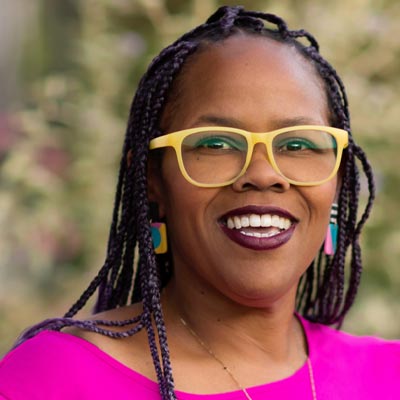
Character Counts for Loan Support from the Community-Managed BIPOC Loan Fund
Keneshia Raymond
“We will continue emphasizing the importance of access to capital for micro to small businesses, the lack of which is a barrier to entry in the conversion of great business ideas into reality.”
State of Black Business 2023
Keneshia Raymond builds businesses for a living. Thirteen years of working in her own businesses (in the wedding industry, tech, education, etc.) and with other entities helping early-stage entrepreneurs and fundraising for startups have made her an entrepreneurship maven. Now she leads the BIPOC Loan Fund, in addition to serving as Director of Programs and Access to Capital at StartUp Tucson.
Community Investment Corporation, a Tucson nonprofit expanding economic opportunities and alternative business financing, originated the BIPOC Loan Fund in response to the demands of the pandemic and George Floyd’s death. CIC’s pilot lent to 17 businesses through a community-managed, character-based process that contrasted sharply with traditional practices.
Keneshia served on CIC’s leadership committee and is now heading up an expansion into metro Phoenix and Yavapai County. Growth Partners Arizona, a statewide community development funding institution, has provided resources to support the BIPOC Loan Fund beyond southern Arizona. Applications have been opened for the Phoenix metro program. Two new community representatives have been added to the committee also.
Business loan decisions are usually based first on financial details. Instead, character-based lending focuses initially on getting to know the applicant. The committee overseeing the lending also reflects the community and represents its interests. Those two facets make a difference, because no one wants to let down their community, and many have the capacity to be strong business owners even if they lack the typical financial wherewithal.
The process gets to the financial details soon enough, but it starts with who the owner is and why they are in business. As Keneshia says, “business is hard.” Understanding the entrepreneur’s “why” facilitates the decision-making process and provides a critical support if the going gets tough.
Decision makers for the BIPOC Loan Fund have “kitchen table” conversations via VideoAsk with potential borrowers. In Keneshia’s experience, the business outcomes are different—and often better— when the answer is “yes” or “not yet” rather than “no.” Those hearing “not yet” can be supported with “how can we help you.”
The BIPOC Loan fund is a new way of increasing access to capital for Black-owned and other businesses. After approval for loans from $500-$10,000 without fees and with sufficient time to repay, each business becomes part of a revolving loan fund. Thus, the fund continues to grow through both leaders’ fundraising and entrepreneurs’ paybacks. Scores of businesses from marketing and photography to bakeries, senior living homes, media, and more are now enhancing the fund that they benefited from.
Keneshia emphasized also the role the community plays in championing the fund’s Black-owned businesses and others. Customers and promoters are essential to the long-term success of not just the BIPOC Loan Fund and its recipients but also to communities’ economies. Each and every person in the community makes a difference.
Testimonial
“The impact this loan has had for my business has been substantial…I was able to work two major events that secured repeat customers because of the funding.”
- Sierra Horsey, CEO, Song & Sugar Sweets

Two Community Development Financial Institutions with Similar Goals but Different Approaches Are Expanding Black-Owned Businesses
“Addressing the issue of access to capital for underserved communities can be approached from several angles. Our school of thought involves educating, informing and guiding Black and minority business owners on tools and opportunities they can use in their entrepreneurial journey.”
State of Black Business 2023
Andre Whittington and Oye Waddell both lead nonprofit organizations with a portfolio of economic empowerment programs, including formal community development financial institutions certified by the U.S. Treasury Department.
CDFIs, which are “market-driven, locally-controlled, private-sector organizations,” according to the national CDFI Coalition, support “business, housing, voluntary organizations, and services central to revitalizing” underserved neighborhoods. These neighborhoods often reflect the nationwide “wealth gap” between Black and White Americans. Most State of Black Business reports have noted the long-term disparities that have resulted from Black families’ traditionally lower incomes, less access to business capital, and limited generational transfer of wealth.
Andre’s Growth Partners Arizona operates statewide, and he is the first Black leader of this sizable CDFI. Oye’s Hustle PHX has recently added a CDFI to its portfolio of individual services in the state’s largest metro area. Each, in his own way, has jumpstarted community development to expand Black-owned businesses and address the wealth gap.
Andre Whittington is Growth Partners’ Chief Collaborator
A New Orleans native, military veteran, and self-described risk taker who “loves challenges,” Andre Whittington realized he wanted more out of life than even his high-powered corporate job or consulting success could offer. Despite the pandemic’s uncertainties, he decided to reorient his career to ensuring community impact, especially by building inclusive economies in places that traditionally have been underserved.
A consulting contact introduced him to Growth Partners Arizona just when the Board of Directors was seeking someone to take the decade-old organization, which had specialized in nonprofit technical assistance and loans, into a new era. They wanted greater impact as a CDFI and a collaborative hub for community development, business financing, and revitalization. The time was right for Growth Partners Arizona to be a bigger, more diverse entity, a better public policy advocate, and a stronger hub for innovation, collaboration, and investments.
Andre started at Growth Partners Arizona in November 2022. Since then, the nonprofit organization has grown substantially, extending its reach statewide and advancing work on its short-term priorities, namely to: grow intentionally through partnerships and collaboration; launch a growth lending model (i.e., increasing organizational capacity as a CDFI and improving customers’ experience); and strengthen outcomes and amplify impact.
The collaborative strategy has garnered attention from the Governor’s Office and organizations looking for community development partners in such areas as business development, character-based lending, green energy, and brownfields redevelopment. Recently, he was appointed to the boards of the Arizona Finance Authority, Arizona Industrial Development Authority, and Greater Arizona Development Authority.
Growth Partners Arizona plays a variety of community development roles at the same time. Andre describes the group’s work as 1) a provider of catalytic capital (often meaning he is seeking partners and investors for expansion or a new loan fund); 2) a community partner helping to build a collaborative ecosystem; and 3) a direct business lender with presence in Tucson, Phoenix, and Flagstaff.
As a result, Growth Partners Arizona, at once, can be working directly with Black entrepreneurs on loans, growth, or pitch competitions, advising cities on supporting entrepreneurs in their communities, helping elected officials understand the challenges BIPOC entrepreneurs have and the potential growth they represent, and developing partnerships with traditional financial players.
No matter the community development effort, Growth Partners Arizona’s overarching strategy is collaborating with others to invest in inclusive economies in Arizona.
Testimonial
“Growth Partners is revolutionizing support for small businesses by creating funding that is more accessible and manageable. This truly sets them apart from traditional lending. It’s a major key for any small business looking to grow and expand.”
- Hunt, Owner, Stardust and Sage
Oye Waddell Powers Hustle PHX for the Common Good
Oye Waddell, a “social entrepreneur,” started Hustle PHX in 2014. The “hustle” nods to his upbringing in a tough South Central Los Angeles neighborhood where he saw family and friends taking advantage of the opportunities (often illegal ones) most available to them. The potential for good from those obvious entrepreneurial skills stayed with him as he studied at the University of Washington, planning to go home to change his community.
After years of starting and managing youth sports programs and leading community development programs in South Central LA, he came to Phoenix to learn more about education, specifically, how to start charter schools as another tool for his neighborhood to address the “school-to-prison-pipeline” he saw affect many families.
Instead, understanding the rise in the prison population and the relationship to economic crimes, he stayed and began Hustle PHX. The organization was started to help young residents have an alternative to selling drugs by creating businesses that help communities flourish instead of tearing them down.
Hustle PHX helps residents turn their ideas—or their hustles—into real businesses, ripe for growth and, eventually, for prosperity, even wealth. Through classes and mentoring that supply “intellectual, social, and financial capital,” Hustle PHX takes future business owners from idea to reality to scaling sustainable enterprises. Loans, credit-building, and personal and business support are all part of Hustle PHX’s “missional lending.” The education, networks, and access to dollars are changing people and places that haven’t seen investment for some time.
Oye saw the hardships residents endured to find financing and how they could be taken advantage of by unscrupulous lenders. Today, he talks about walking with them “arm in arm” and “step by step” for long-term sustainable growth. However, the decision to start the now three-year-old CDFI required an intense effort, especially for someone without banking experience. Recruiting advisers and raising capital testified to Oye’s devotion to learning and dedication to Phoenix’ Black and underserved communities.
Also a business owner (New Culture and Adonai Family Homes) and pastor at Sojourn Village Church, Oye’s work has been shaped by numerous faith leaders and the mentoring and resources available in their churches. In addition, numerous financial and community institutions now sponsor aspects of Hustle PHX.
With more investment in business growth and community quality of life from Hustle PHX, Arizona’s largest metro may, thankfully, never be the same.
Testimonial
"When I decided to start my transportation business, I knew I needed guidance and a deeper understanding of my 'why.' Hustle PHX has provided just that and more…I now have the confidence, resources, and network to navigate the challenges of entrepreneurship and achieve lasting success."
- Demetrius Lester